




Suppose, for example, a business pays its employees part way through a month and therefore has to make an adjusting entry at the end of the month for wages earned but not yet paid. If the amount was for 1,500 then the following adjusting entry would have been made. Because the reversing entry cleared the payable, you can now record the existing payment as a normal transaction. After recording this entry, the prepaid insurance should already show a zero balance since the whole insurance plan has already expired. If the accountant did not make a reversing entry at the beginning of the year, the accountant will have this entry upon payment of the rent. Notice also that in the reversing entry at the beginning of the period, Interest Income was trial balance already debited for $1,000.
Function of the Reversing Journal
Reversing entries move these transactions to the correct period by undoing previous adjustments and allowing re-entry at the right time. Imagine a company accruing an expense of $5,000 in August but not receiving the supplier’s invoice until September. At the beginning of September, the company posts a reversing entry that debits the accrued expense payable account and credits the expense account. Automatic reversing entry rely on accounting software to reverse journal entries without manual intervention. During the monthly closing cycle, the software posts entries, and at the start of the new month, it reverses them automatically. While optional, reversing journal entries offers a practical way to manage adjustments without deleting prior entries, preserving the integrity of the financial records.
How Nicki Passed the CPA Exams in 4 Months
If we do not record, we will understate operating expenses and liability (amount owed to staff). We can use the best estimation, which is the amount from the prior month if we don’t expect any changes. The variance between accrue and actual expense will adjust to the profit and loss account in next period. Perform routine reviews of financial statements to verify the accuracy of reversing entries. Reversing entries make even a complicated entry smoother by automatically clearing out previous adjustments, making space for accurate re-recording.
- By automatically reversing journal entries at the start of a new period, businesses reduce the risk of errors, maintaining confidence in the accuracy of financial statements.
- Since the $250 is insignificant difference from an estimated amount, it is acceptable to report the $250 as a January expense instead of a December expense.
- The net effect of this entry to salaries expense would be a debit balance of $7,000 since the account was first credited for $5,000 on January 1 and debited for $12,000 on January 15.
- Observe that the above entry still recognized a salaries expense of $7,000 on January 15 which is the same amount of expense recognized when a reversing entry was made.
- They allow these users to clean up temporary accruals quickly, reduce the margin of error, and maintain clean ledgers without excessive adjustments in the following period.
- An account qualifies for a reversing entry when it reflects transactions that span multiple periods or when the balance sheet reveals new real accounts.
Double-entry Accounting
Professionals responsible for month-end or year-end closures benefit greatly from reversing entries. They allow these users to clean up temporary accruals quickly, reduce the margin of error, and maintain clean ledgers without excessive adjustments in the following period. In general, the following types of adjusting entry should have reversing entries. With Wafeq, you can automate your adjusting and reversing entries with just a click, ensuring accuracy, saving time, and keeping your books audit-ready at any time. When used properly, reversing entries help maintain a clean, organized ledger, saving time, reducing confusion, and supporting accurate financial reporting.

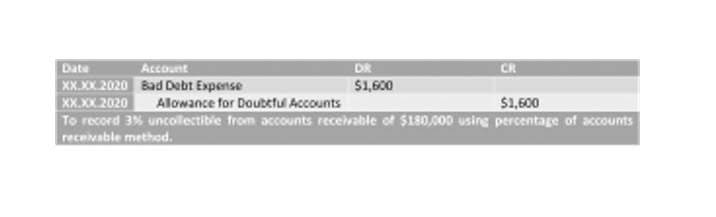
The resulting debit balance of $250 in Temp Service Expense will be reported as a January expense. Since the $250 is insignificant difference from an estimated amount, it is acceptable to report the $250 as a January expense instead of a December expense. After the financial statements are prepared, the closing entries will transfer the balance in the account Temp Service Expense to an owner’s/stockholders’ equity account. As a result, the account Temp Service Expense will begin January with a zero balance. Once the reversing entry is made, you can simply record the payment entry just like any other payment entry.
BAR CPA Practice Questions: Using Strategies to Mitigate Financial Risks
- Pass the journal entries recording the actual payment of interest and receipt of rent first without reversing entries and then with reversing entries.
- Once the invoice arrives, the company records the transaction accurately by debiting the expense account and crediting the accrued expense payable account.
- Reversing entries are versatile accounting tools that can be applied in various situations to simplify financial records and ensure accuracy.
- Duplicate entries can occur when adjusting and regular transactions overlap.
- Many assets are carried at historical cost, and other assets are not reported at all (such as the value of a company’s brand name, patents, and other internally developed resources).
- In Nov 202X, they sign a contract with a customer to rent the car for 2 months from 01 Dec 202X to 31 Jan 202X+1, the fee is $5,000 per month.
This creates a transparent audit trail and helps avoid confusion during reviews or audits. Reversing entries contribute to maintaining a clear audit trail by properly documenting adjustments and their reversals. This transparency is crucial for compliance with accounting standards and regulatory requirements. Used for one-time or unique adjustments, such as inventory write-offs or deferred taxes, these entries simplify accounting for complex situations.
What is a Reversing Entry?
Adjusting entries for unearned revenue under the liability method and prepaid expense under the asset method do not make sense to reverse. Adjusting entries for depreciation, bad debts and other allowances also are not reversed. It might be helpful to look at the accounting for both situations to see how reversing entries are optional difficult bookkeeping can be without recording the reversing entries. Let’s look at let’s go back to your accounting cycle example of Paul’s Guitar Shop. Frequently, reversing entries are passed to fix input errors made during the passage of any journal entry. However, reverse entries add to the workload of the individual performing the entries.
Types of Adjusting Entries Commonly Reversed
According to the Department of Trade and Industry (DTI) in the Philippines, over 50% of SMEs cite accounting errors as a barrier to growth, with reversing entry being a frequent concern. Leveraging accounting technology could significantly reduce these challenges. With the reversing entry, the January 10 entry credits the interest revenue directly. Without the reversing entry, the credit on January 10 would be to the Interest Receivable account instead of the Interest Revenue account. If you were unable to make the reversing entry, then you need still need to prepare an adjusting entry to recognize the earned portion on February 29. Ensure all adjusting and reversing entries are well-documented with detailed descriptions.
What is a reversing entry?
Businesses can streamline their processes, reduce errors, Remote Bookkeeping and maintain financial accuracy by identifying which accounts require reversing entry adjustments. Accountants create manual reversing journal entries to adjust or cancel previous transactions, especially those recorded incorrectly. These entries can be posted any time during the accounting period, offering flexibility. The purpose of these entries is to reverse the adjusting entries that were made in the previous financial reporting period. It is commonly used for revenue and expense account which had accruals or prepayment in the preceding accounting cycle and the accountant prefers not to keep these in the accounting system.